

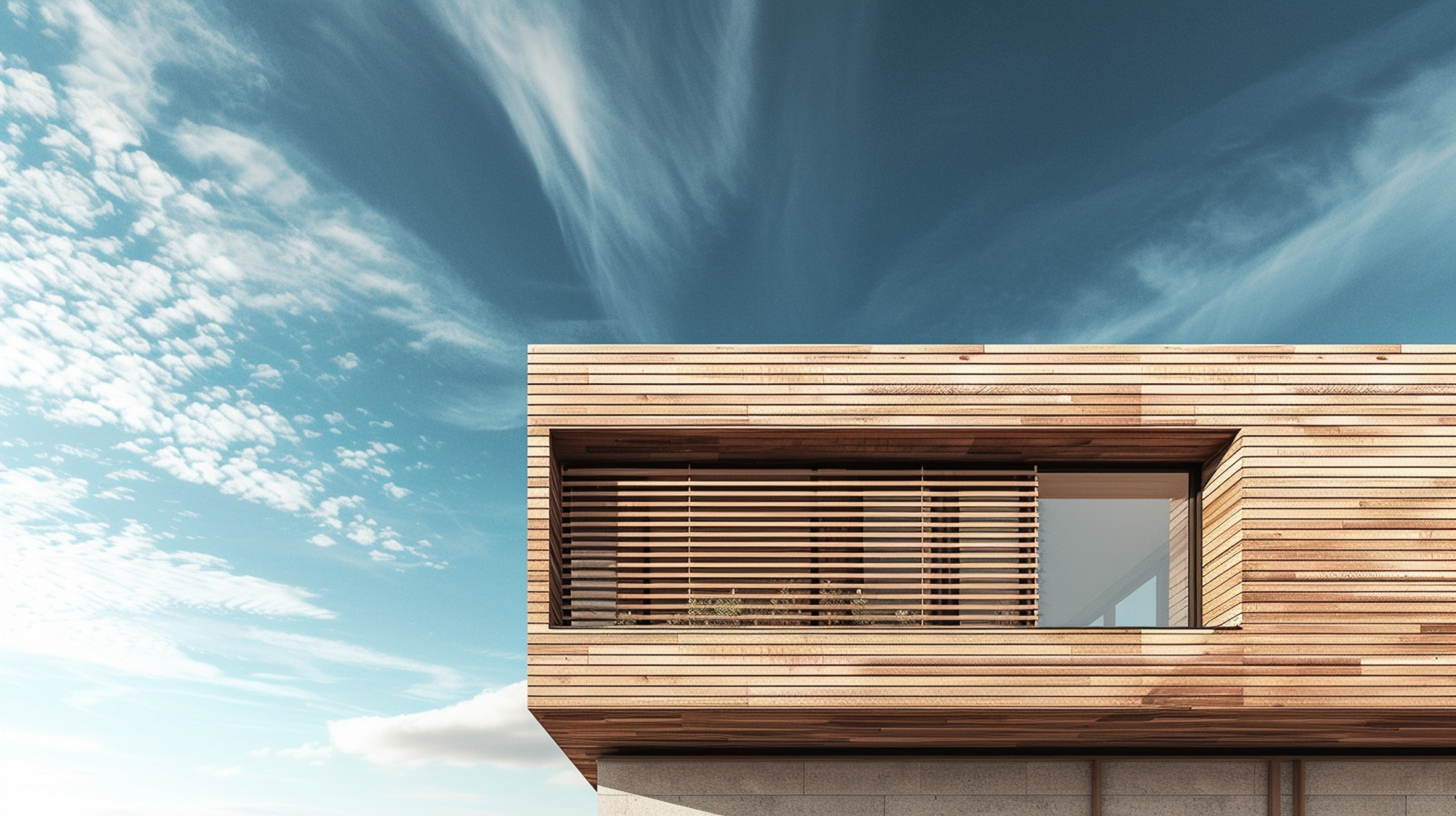
Most people imagine a home being built piece by piece on site, exposed to weather, delays, and constant coordination challenges. Modular construction follows a fundamentally different path.
Instead of starting outdoors, modular homes begin their life in a controlled factory environment. Here, the entire building process is planned, coordinated, and executed with precision long before anything arrives on site. This shift transforms not only how homes are built, but how reliable and efficient the process becomes.
Every modular home begins with a fully resolved design. Layouts, structural systems, mechanical components, and finishes are coordinated upfront.
This early alignment is critical. Because modules are built off-site, decisions must be made clearly and intentionally from the start. Architectural design and engineering work closely together to ensure that each module will fit, connect, and perform exactly as planned.
By resolving details early, modular construction reduces uncertainty later — one of the key advantages over traditional building methods.
Once designs are finalized, construction moves into the factory. Unlike outdoor job sites, factories provide consistent working conditions, protected materials, and specialized teams focused on specific tasks.
Each module is built as a complete structural unit, including:
Because work happens indoors, materials are protected from moisture and temperature fluctuations. Repeated quality checks ensure accuracy at every stage, resulting in higher consistency and better overall build quality.
One of the most significant advantages of modular construction is that multiple processes happen simultaneously.
While modules are being built in the factory, site preparation takes place at the foundation location. Excavation, foundations, and utility connections can move forward in parallel with construction — dramatically reducing total project time.
This overlap is nearly impossible with traditional construction, where progress is sequential and often interrupted by delays.
Once completed, modules are carefully wrapped, protected, and transported to the building site. Logistics are planned in advance to ensure safe delivery, even to remote or challenging locations.
Because modules arrive largely finished, transport marks the transition from construction to assembly — not the beginning of unpredictable on-site work.
When modules arrive on site, installation happens quickly. Using cranes and specialized equipment, modules are positioned on the prepared foundation and connected to form the complete home.
This phase typically takes days rather than months. Connections between modules, final system hookups, and exterior detailing are completed efficiently, minimizing disruption to the site and surrounding environment.
After assembly, the home undergoes final inspections and system checks. Because much of the work was completed and tested in the factory, this phase is focused on verification rather than troubleshooting.
The result is a home that is ready for living sooner, with fewer unknowns and greater confidence in long-term performance.
The modular building process is not just faster — it is smarter. By shifting complexity into a controlled environment and planning ahead, modular construction reduces waste, improves quality, and creates more predictable outcomes.
For homeowners, this means:
It also allows homes to be built with greater attention to detail and long-term performance. From factory floor to foundation, modular construction redefines what it means to build a home. It replaces uncertainty with structure, delays with coordination, and exposure with control.
Rather than reacting to problems as they arise, the modular process is designed to prevent them in the first place.
Understanding how modular homes are built reveals why this approach continues to gain momentum. It’s not simply a different construction method — it’s a fundamentally better system.
By bringing design, engineering, and construction together under one roof before a single module reaches the site, modular construction delivers homes that are more reliable, efficient, and thoughtfully made.
From factory to foundation, the difference is clear.

February 2, 2026

February 2, 2026
February 2, 2026


